
When we think about improving our health, we often focus on what we can change about ourselves. We might adjust our eating habits, start a new exercise routine, try a different supplement, or look for ways to get more consistent sleep.
But what if some of the most meaningful opportunities to support our well-being are right outside of us?
The spaces we spend time in, the light we're exposed to, the sounds around us, and even the way we organize our daily routines can influence how we feel. These environmental factors are easy to overlook, but they offer an interesting place to start when exploring a more personalized approach to health.
And they bring us to a less familiar side of biohacking.
Your Environment Is Part of Your Wellness Routine
Biohacking is often associated with advanced technology, specialized equipment, and elaborate wellness protocols. But at its simplest, it involves experimenting with habits, routines, and environmental factors to better understand what supports your health and well-being.
Your environment is a natural place to begin.
Consider how different your body might feel after spending a morning outside compared with sitting under artificial lighting all day. Or how a quiet, comfortable space at the end of a busy day might influence your ability to unwind.
Our surroundings provide signals that our bodies respond to throughout the day. Some of these responses happen automatically, without us giving them much thought.
The opportunity is to become a little more aware of those influences and consider whether there are small adjustments that might help us feel more supported.
5 Everyday Environmental Factors to Explore
You don't need to redesign your home or invest in new wellness products to make your environment work a little better for you. Start by noticing the spaces you already inhabit and how you respond to them.
Here are five areas worth exploring.
1. Let Natural Light Set the Tone for Your Day
Light is one of the most important environmental cues for our body's internal clock, also known as the circadian rhythm. Exposure to natural light, particularly in the morning, helps signal that it's time to be awake and alert. Light exposure throughout the day and reduced brightness in the evening also help support our natural sleep-wake cycle.
In fact, a systematic review of 45 studies found that brighter morning light was associated with better self-reported sleep outcomes, while brighter evening light was associated with shifts toward later sleep timing. This is one reason why getting natural light during the day and creating a dimmer environment as evening approaches can be worthwhile habits to explore.
Try this: Step outside for a few minutes in the morning. Enjoy your coffee on the porch, take a short walk, or simply spend a little time in natural daylight before settling into your day. In the evening, consider dimming the lights as bedtime approaches to create a gentler transition toward rest.
2. Pay Attention to the Sounds Around You
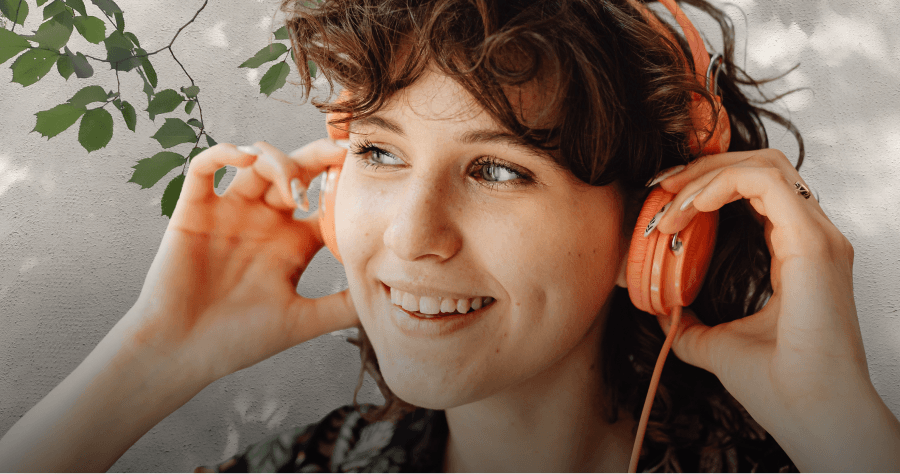
Sound can influence our mood, attention, and experience of stress. Think about how you feel in a quiet room compared with a noisy, busy environment. Some sounds may help you feel focused or energized, while others may feel distracted or overwhelmed.
Try this: Notice the sound environment you spend the most time in. Could you create a quieter space for focused work? Would listening to calming music help you transition out of a busy day? Or might a few minutes without background noise give you a welcome pause?
3. Create Space to Unwind
Our surroundings can either support or compete with our efforts to rest. A bedroom filled with work materials, bright lighting, and constant notifications may make it harder to mentally shift out of the day's demands.
Try this: Create a small evening ritual that helps signal the transition from activity to rest. This might mean putting away your laptop, turning down the lights, silencing notifications, or making your bedroom a more restful space. You don't need a perfect sleep environment. Start with one change that feels manageable.
4. Make Movement More Accessible
Our physical environments can influence how much we move throughout the day. When we're working from home or spending long hours at a desk, movement can easily become an afterthought. Small environmental cues can make it easier to incorporate activity into an otherwise sedentary routine.
In behavioral science, this idea is sometimes referred to as choice architecture: designing our environments in ways that make certain behaviors easier or more accessible. Research suggests that environmental changes and prompts can influence physical activity and sedentary behavior. For example, making stairs more visible or accessible can encourage people to choose them over the elevator.
Try this: Keep walking shoes near the door, place a water bottle across the room so you have a reason to get up, place hand weights near your desk, or take a few minutes to stretch between meetings. If you have the option, move your workspace closer to a window or take a phone call while walking.
The goal isn't to add another demanding workout to your schedule. It's to make everyday movement a little more accessible.
5. Take Care of Your Hearing
This one surprises people! Hearing loss was one of the two biggest risk factors in the Lancet report, alongside high LDL cholesterol. When it's harder to hear, the brain works overtime to process sound, and people often pull back from conversations.
Our environment extends beyond the physical spaces we occupy. It includes the people we spend time with, the communities we're part of, and the experiences that help us feel connected.
At IIN, this connects to the concept of Primary Food: the areas of life that nourish us beyond what's on our plates. Relationships, career, physical activity, spirituality, and our connection to ourselves and the world around us all contribute to our overall well-being.
Try this: Think about the spaces and people that leave you feeling supported, energized, or more like yourself. Could you make a little more room for those experiences in your week? Maybe it's scheduling time with a friend, spending time in nature, or finding a community that shares your interests.
Small Changes, Personal Discoveries
One of the most important things to remember when exploring your environment is that there isn't one perfect setup for everyone.
This is where bio-individuality, a foundational concept here at IIN, comes into play. Our bodies, lifestyles, preferences, and circumstances are different. What feels calming to one person might feel isolating to another. What helps one person focus might be distracting for someone else.
Rather than assuming that a particular environment or routine is universally beneficial, approach it as an opportunity to learn more about yourself.
You might experiment with getting outside earlier in the day, creating a quieter workspace, or making your evenings a little less stimulating. Pay attention to how you feel before and after the change. Does it make a difference? Does it fit your lifestyle? Is it something you want to continue?
You don't need to change everything at once. Choose one small adjustment, give yourself time to notice the results, and remain open to making changes along the way.
This is what makes a personalized approach to wellness so valuable. It's less about following someone else's formula and more about developing an understanding of what genuinely supports you.
A More Intentional Approach to Everyday Health
It's easy to think of health as something we work on through big goals or major lifestyle changes. But our well-being is also shaped by the small, everyday experiences we might not think twice about.
The light in our homes. The spaces where we work and rest. The people we spend time with. The opportunities we create to move, connect, and recharge.
When we begin paying attention to these influences, we may discover that supporting our health doesn't always require adding something new. Sometimes, it starts with looking at what is already around us in a different way.
And that's just one way to rethink what biohacking can mean.
Continue Exploring with IIN’s Free Biohacking, Unplugged Webinar!
What if supporting your health could be simpler and more personal than you think?
Join Sheri Vettel, IIN's Senior Health & Nutrition Manager, for Biohacking, Unplugged, an upcoming free webinar exploring a fresh perspective on biohacking, everyday wellness, and the small experiments that can help you better understand your body's needs.
You'll discover why the most meaningful approach isn't necessarily the most complicated, and leave with new ideas for exploring what works for you. Register here.
Sources
Dautovich, N. D., Schreiber, D. R., Imel, J. L., Tighe, C. A., Shoji, K. D., Cyrus, J., Bryant, N., Lisech, A., O’Brien, C., & Dzierzewski, J. M. (2019). A systematic review of the amount and timing of light in association with objective and subjective sleep outcomes in community-dwelling adults. Sleep Health, 5(1), 31–48. https://doi.org/10.1016/j.sleh.2018.09.006
Published: November 5, 2026
Updated: November 5, 2026


