
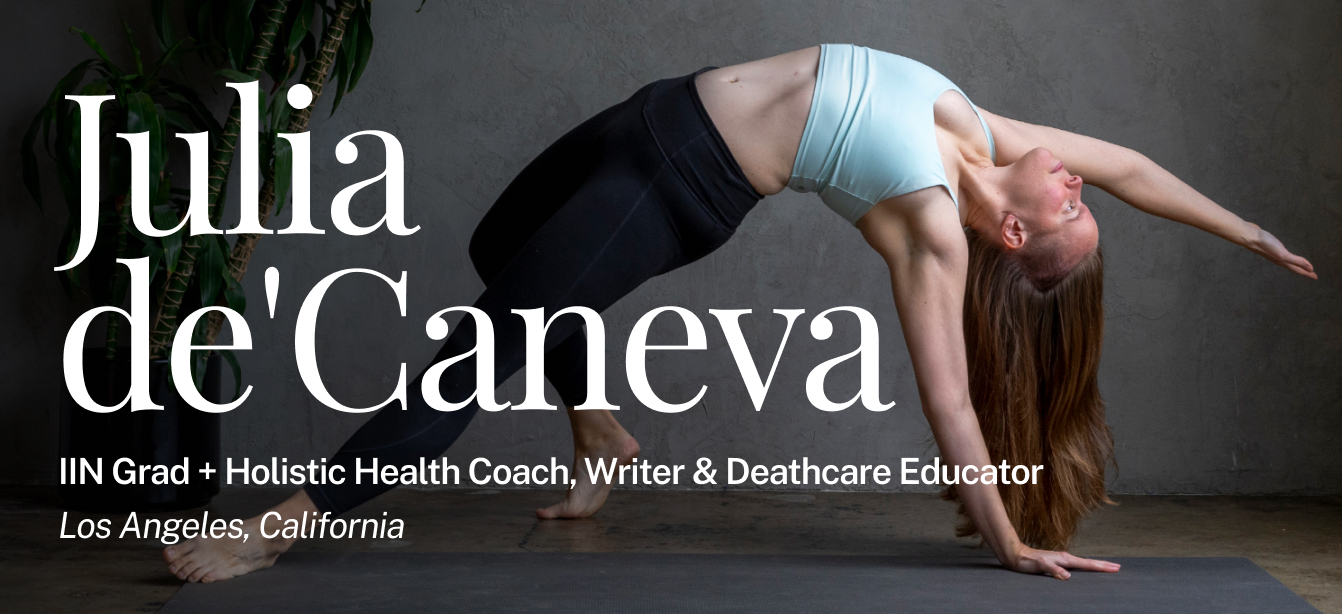
I spent years navigating my health through trial, error, and crisis, believing that if I could just “do everything right,” I could feel safe and whole. On the outside, I appeared functional and organized. On the inside, I felt untethered and overwhelmed. Facing cancer at 29 forced me to confront what truly mattered—my body, my time, and my purpose—and it sparked a desire to help others create space for real wellness. That path led me to IIN.
After completing The Health Coach Training Program™, I didn’t just gain knowledge—I discovered how to translate my own healing journey into actionable support for others. IIN helped me integrate organization, mindfulness, and lifestyle in a way that felt natural and empowering. Now, through coaching, writing, and my work with my company Elemental, I guide people to reclaim their energy, create structure that supports wellness, and embrace habits that ripple out to improve every part of their lives.
Q&A: When the System Wasn't Enough
YOU’VE SHARED THAT A CANCER DIAGNOSIS IN YOUR LATE TWENTIES BECAME A MAJOR TURNING POINT IN YOUR LIFE. WHAT SHIFTED FOR YOU IN THAT MOMENT — IN HOW YOU RELATED TO YOUR BODY, YOUR TIME, OR YOUR PRIORITIES?
A: Despite a relatively optimistic prognosis, recognizing that I wasn’t at all prepared to be a dying 30-year-old, in body, mind, or spirit was what shattered the illusion that mortality isn’t with us all the time. This new lens called into question everything I had sacrificed my health and well-being for. Every minute of every job I’d had, every time I powered through fatigue with caffeine, every relationship where I had to contort myself to keep the peace.
What I saw as my core values at the time rang hollow: achievement, nothing less than excellence, career ambition. Almost overnight it became presence, time for reflection, community, nature. Anything taking away from my health and well-being seemed completely backwards, and as it turned out, much of the life I had built and burned out on fit into this category. It was time for a recalibration.
AS YOU NAVIGATED TREATMENT AND RECOVERY, WHERE DID THE TRADITIONAL MEDICAL SYSTEM SUPPORT YOU, AND WHERE DID YOU FEEL CALLED TO SEEK ADDITIONAL FORMS OF CARE?
A: Heading into my diagnosis, I thought of medical care as Western medicine. While I didn’t have an active dislike of complementary therapies and modalities, I also didn’t previously seek them out.
Because I had thyroid cancer, I wasn’t given an oncologist (or access to any of the cancer resources); I worked only with an endocrinologist. She was knowledgeable and gave me sound advice, but because of her training we only looked at a very narrow picture of my health. When my thyroid pill wasn’t absorbing how we thought, the only answer was to change the dose, rather than to dig deeper.
Gratefully after my diagnosis, I was given the name of an oncology Naturopath specializing in Chinese medicine and an oncology nutritionist. This was an absolute godsend, because they were able to address my whole-body wellness, healing up 15 years of IBS through diet and lifestyle changes, and making sure that my body, mind, and spirit were being nourished as well.
Over the next seven years, I explored a number of other modalities to support my emotional body, spiritual body, and beyond. These have proven to not only increase my quality of life but have also been pivotal in my healing. Western medicine helped me remove the tumors, and everyone else has helped me cultivate a body that feels balanced, in harmony, strong, and thereby inhospitable to tumors.
Q&A: Searching for Wholeness
HOW DID LIVING THROUGH CANCER CHANGE THE WAY YOU UNDERSTAND HEALTH BEYOND SYMPTOMS AND DIAGNOSES?
A: I immediately saw the connection between how I was living my life before my diagnosis and receiving the diagnosis, so when Western medicine said, “We don’t really know what causes this.” I couldn’t help but think I had an inkling. Learning to pay attention to my body, specifically the sensations in my body, was game-changing.
To be a Type A over-achiever, I had to dissociate—any symptoms were getting in the way of my productivity and success, so the story went. My IBS started in high school (undoubtedly as a downstream effect of the immense stress I was under + hormones). Now, after my diagnosis, I see my IBS as a signal from my body that something is not right—I was pushing my body beyond the limits of my very sensitive system, and I was doing it for things that didn’t matter to me at all (though of course I thought it was very important at the time).
It’s so clear to me now that whenever my body is reacting to something, whether in my food, environment, or my thoughts, it’s trying to let me know what’s supportive and what isn’t. I no longer see chronic conditions or illness as something to manage the symptoms of, but rather, an invitation to explore what’s not being addressed.
WAS THERE A MOMENT WHEN YOU REALIZED HEALING WOULD REQUIRE ORGANIZING MORE THAN JUST YOUR MEDICAL CARE?
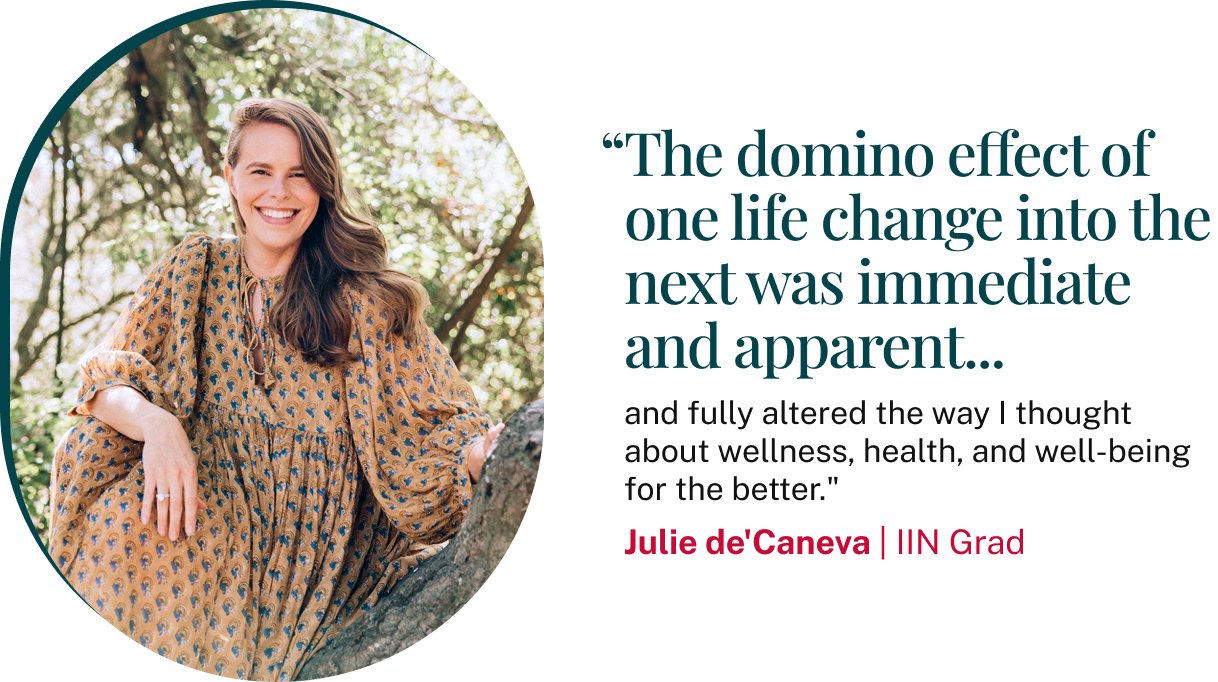
A: Once I realized that Western medicine could only help me remove the tumors but didn’t have any idea about how to keep it from recurring, I knew that my healing journey would extend far beyond my at-the-time narrow definition of medical care. Completely changing my lifestyle and diet meant I also had to overhaul my idea of work, my schedule, and fundamentally shift the pace of my life. I went from someone who could only really prepare pasta with cheese to cooking 10+ hours a week, making every speck of my food from scratch. I could feel how much my thoughts impacted my well-being and how much I needed to focus on consistent, gentle movement rather than intense, achievement-based workouts. The domino effect of one life change into the next was immediate and apparent, and fully altered the way I thought about wellness, health, and well-being for the better.
Q&A: Organization as Healing
YOU DESCRIBE YOUR WORK AS “ORGANIZING YOUR WHOLE LIFE TO SUPPORT YOUR HEALTH.” HOW DID THAT PHILOSOPHY EMERGE THROUGH YOUR OWN HEALING JOURNEY?
A: I started working as a professional home organizer in 2015 and saw firsthand how many clients were chronically disorganized with wildly over-packed schedules, overstuffed email inboxes, and the relentless pace their lives demanded. What I also saw was the impact of their lifestyle on their health. I started to think it wasn’t a coincidence that many of my clients had recurrent doctor's appointments and even similar afflictions.
We are conditioned to think about our own physical wellness last, as productivity reigns supreme, and everyone was clearly overwhelmed. There was not a lot of time for resting and digesting. Now I look at the pieces of modern life as, often, the things that get in the way of health.
After my diagnosis, I started supporting small business owners with life coaching but quickly realized that until their businesses and personal lives were better organized, they were never going to have the time or capacity to focus on their health. Just the way Western medicine focuses on the treatment of disease (or in my case, just the tumor), trying to support someone through Health Coaching needed to include all of the pieces of their life. Organizing became a foundational practice for whole-body wellness.
HOW DID YOUR BACKGROUND AS A PROFESSIONAL HOME ORGANIZER INFLUENCE HOW YOU CREATED STRUCTURE, CLARITY, OR CALM DURING TREATMENT AND RECOVERY?
A: I was so grateful for my years of organizing when I received my diagnosis. It felt easy to me to create structures for keeping track of doctor’s appointments, medical bills, and even addressing what I needed as far as supplement cases and overhauling my pantry (removing lots of food from your lifelong diet means completely reacquainting yourself with your pantry!). It helped me feel confident that I could adapt to the sure-to-be changing circumstances without getting too anxious.
WHAT CONNECTIONS DO YOU SEE BETWEEN HOME ORGANIZING AND HOLISTIC COACHING?
A: So often people want to have their homes and lives organized because it gives them a sense of control, but if you look a little deeper, the transformation can even have a positive impact on your nervous system.
The reasons people seek out support in organizing are the same as health coaching: they want to feel better, they want someone who will listen to them with empathy and steady attention, and they want a hand to hold while they venture into the unknowns of changing their life. Both organizing and coaching are more effective with an open curiosity, and both are ways to create a foundation for someone to truly thrive. Creating change in your life requires breaking things down into their constituent parts, and organizing is nothing if not making sure each piece of the puzzle or the flow chart makes sense. In creativity, form follows function and organizing and coaching are both ways of addressing function and then form.
Q&A: Reclaiming Agency Through Holistic Health Coaching
AFTER MOVING THROUGH CANCER, WHAT DREW YOU TOWARD HOLISTIC HEALTH COACHING AS A WAY TO SUPPORT OTHERS?
A: The women I work with are often high-functioning and capable, yet quietly frustrated. Many are navigating midlife changes, including shifts in hormones, energy, weight, sleep, brain fog, or mood, and feel confused because what used to work no longer does. When they first come to me, they are usually tired of trying harder. They have followed the advice, done the programs, and blamed themselves when their bodies did not respond the way they expected.
There is often a mix of physical symptoms and emotional exhaustion, along with a desire to feel like themselves again without living in restriction or constant self-criticism. What they are really seeking is clarity, support, and a way forward that feels sustainable, something that honors both their biology and their lives.
Cancer inspired me to leave my work as a graphic designer, which had been more of a source of burnout than creativity in the years leading up to my diagnosis. I wasn’t sure how I wanted to be of service in the world, but I knew it needed to be meaningful (making retail email campaign graphics just wasn’t going to cut it anymore). I dipped my toes into Life Coaching but quickly realized that people really needed organizing support. Life coaching also critically left out the piece of my client’s health, which to me felt so integral to their whole life wellness. It was only natural to blend my professional endeavors with all of the lived experience from navigating my medical care and expanding into deeper levels of personal growth and thereby healing.
WHAT LED YOU TO PURSUE TRAINING THROUGH INTEGRATIVE NUTRITION?
A: I was searching for a program that would be both comprehensive and multi-faceted. While looking into the different routes of schooling I could take, I was frustrated about how narrow-focused so many of the programs were. I wanted to be able to draw from my experiences with Chinese medicine, Ayurveda, yoga, and beyond.
Once I found The Health Coaching Training Program™ through IIN, I was certain this was the program for me. The program seemed like the perfect place to integrate my lived experience and new-found knowledge, and also how to transmute that into supporting others in their health journeys.
HOW DID YOUR IIN EDUCATION HELP YOU INTEGRATE ORGANIZATION, MINDSET, AND LIFESTYLE INTO A COHESIVE APPROACH?
A: With such a wide variety of voices and teachings through IIN, it was clear to me that the bio-individual approach I already took with my organizing clients was the perfect foundation for working with clients in their health journeys. Organizing requires me to deeply understand how my clients use and live in their spaces to help them build systems, and the health coaching support doesn’t look much different. The training gave me the confidence to trust my own experience and intuition, allowing this framework of organizing, mindset, and lifestyle to come together organically.
Q&A: The Work Today: Supporting People in the In-Between
WHO DO YOU MOST OFTEN WORK WITH NOW, AND WHAT ARE THEY USUALLY FEELING WHEN THEY COME TO YOU?
A: All of my clients come to me looking to make a change in their life. Whether starting with organizing that sparks an interest in their health (when you clear away the clutter you’re left with things as they are) or they’ve been navigating the medical system that isn’t giving them the holistic approach they are wanting and want to build a team of care to their liking. So many of my clients (and friends!) are other people who butted up against the limitations of their traditional medical care and are curious to explore what health means to them. My clients are typically feeling overwhelmed, under supported, and a bit apprehensive about diving into uncharted territory alone.
WHAT DOES MEANINGFUL SUPPORT LOOK LIKE WHEN SOMEONE DOESN’T YET HAVE CLEAR ANSWERS?
A: So much of health is uncertain and getting healthy requires moving forward without always having a clear path. Meaningful support is someone who listens without judgment or agenda, space to share your concerns without needing to caretake the answer and figure out what your next step looks like. Having a sounding board to help you sort through what each next step looks like is critical when you’re walking a path you’re not familiar with.
Q&A: Perspective & Wisdom
HOW HAS LIVING WITH THE REALITY OF MORTALITY SHAPED HOW YOU APPROACH WELLNESS TODAY?
A: To me, you can’t have true wellness without mortality. Without the deep truth that we will die, our health and wellness can feel secondary (unfortunately work usually comes first). Some people take the kind of reckless approach to YOLO—adrenaline-fueled adventures to the edge of aliveness, but my version of YOLO looks like intentional meals at home, plenty of rest, and honoring my nervous system. Mortality gives me the framework for living an intentional life, and it helps me embrace simplicity as a valuable part of a life well-lived. The beauty of this is that everyone’s relationship to mortality is different, as is their version of a life well-lived. If something doesn’t matter to me on my deathbed, does it deserve a place in my life? If something isn’t contributing to my overall well-being and health, what purpose is it serving in my life? Mortality is the ultimate clarifying lens.
WHAT’S ONE MISCONCEPTION ABOUT CANCER, HEALING, OR WELLNESS YOU WISH MORE PEOPLE UNDERSTOOD?
A: People think that the opposite of health and wellness is death, but it’s not, it’s disease and unwellness. People believe dying is a failure, rather than an eventuality, a natural process. Recognizing and honoring death can actually help support your healing because you’re not acting out of the fear of dying but rather moving towards living more, maximizing the time you do have, no matter how long.
WHAT DO YOU WISH MORE PEOPLE KNEW ABOUT THE ROLE LIFESTYLE AND ENVIRONMENT PLAY ALONGSIDE MEDICAL CARE?
A: It is everything. Standard medical care is great at triage medicine, but not so great at long-term, quality-of-life care. There are so many conditions that people manage with various medications that can be fully reversed with diet and lifestyle changes. I also think it’s important to be clear that “lifestyle changes” doesn’t just mean exercise; it includes how you approach your schedule and to-do list, the people you surround yourself with, your job, and even your mindset, to name a few facets. For some reason, people also think that if you encourage them to make lifestyle and environmental changes, you’re saying to do it instead of medical care. That is not the case. Literally, everyone stands to benefit from taking an honest look at their lifestyle and environment, and in many cases even small changes can make their medical care that much more effective. It is truly amazing to see the enormous benefits of simple (but not always easy) lifestyle changes. I know, because I’ve lived it.
Q&A: Reflection, Joy, & the Human Side
BEST DECISION YOU EVER MADE?
A: Choosing to take my health journey on my own terms.
A BOOK OR PODCAST YOU’D RECOMMEND TO OUR COMMUNITY?
A: The Five Invitations by Frank Ostaseski.
IF YOU COULD GO BACK IN TIME TO WHEN YOU WERE JUST STARTING OUT IN YOUR CAREER, WHAT WOULD YOU TELL YOUR PAST SELF?
A: When I was just starting out graphic design work fresh out of college: “Don’t worry if this isn’t your forever career. When it starts to feel like something isn’t quite right, try something new! You will surprise yourself and be so much happier.”
IF YOU COULD BE ANY FRUIT OR VEGGIE, WHICH WOULD YOU BE — AND WHY?
A: A blackberry. They are tart yet sweet, crunchy yet soft, multifaceted and always a treat. They’re slightly underestimated but make everything better. Coconut yogurt? Better. Grain-free tart filling? Better. Plus they grow on thorny vines—how cool is that?
WHAT ARTIST OR BAND DO YOU LISTEN TO WHEN YOU NEED TO STAY MOTIVATED?
A: This is so tricky! I love some EDM-hype and 2000s Atlanta hip hop, but Fink never fails to bring me back to myself.
Published: February 26, 2026
Updated: February 26, 2026