
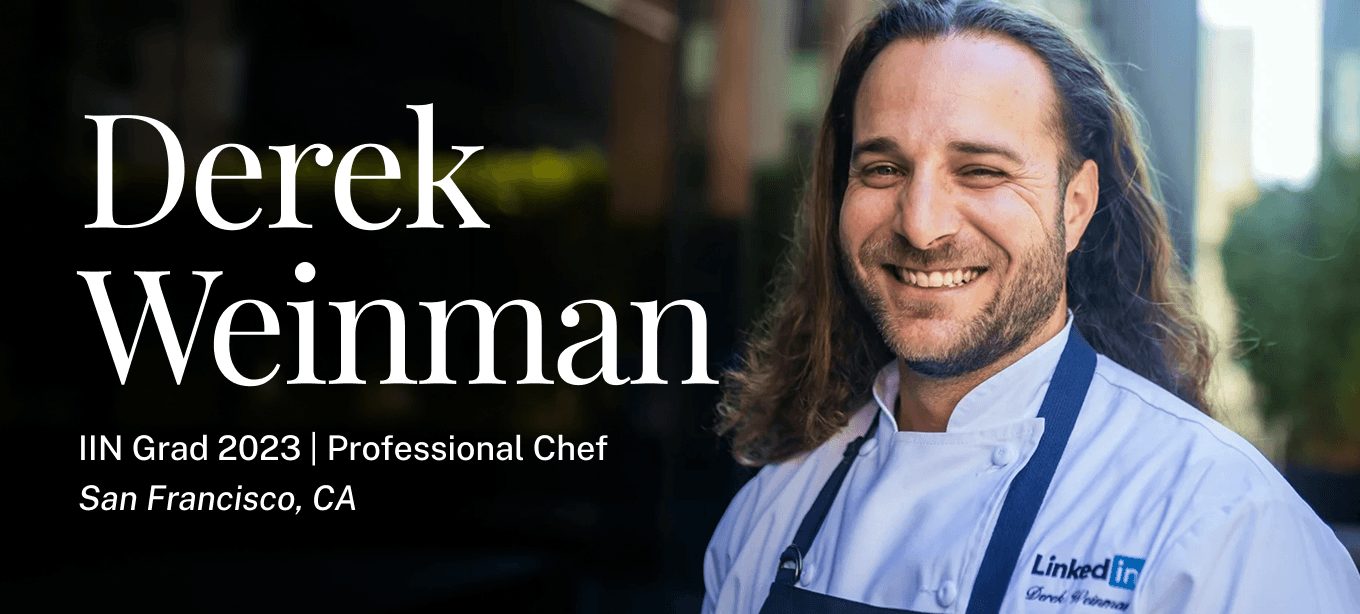
I fell in love with cooking at eight years old. I’d watch chefs on TV and kick my mom out of the kitchen so I could cook for everyone. At 14, I was diagnosed with Crohn’s disease. For years, I didn’t see the connection between food, lifestyle, and my body, even while I worked in kitchens full of fresh ingredients. When I moved to California, I started questioning my habits and paying attention to how I felt.
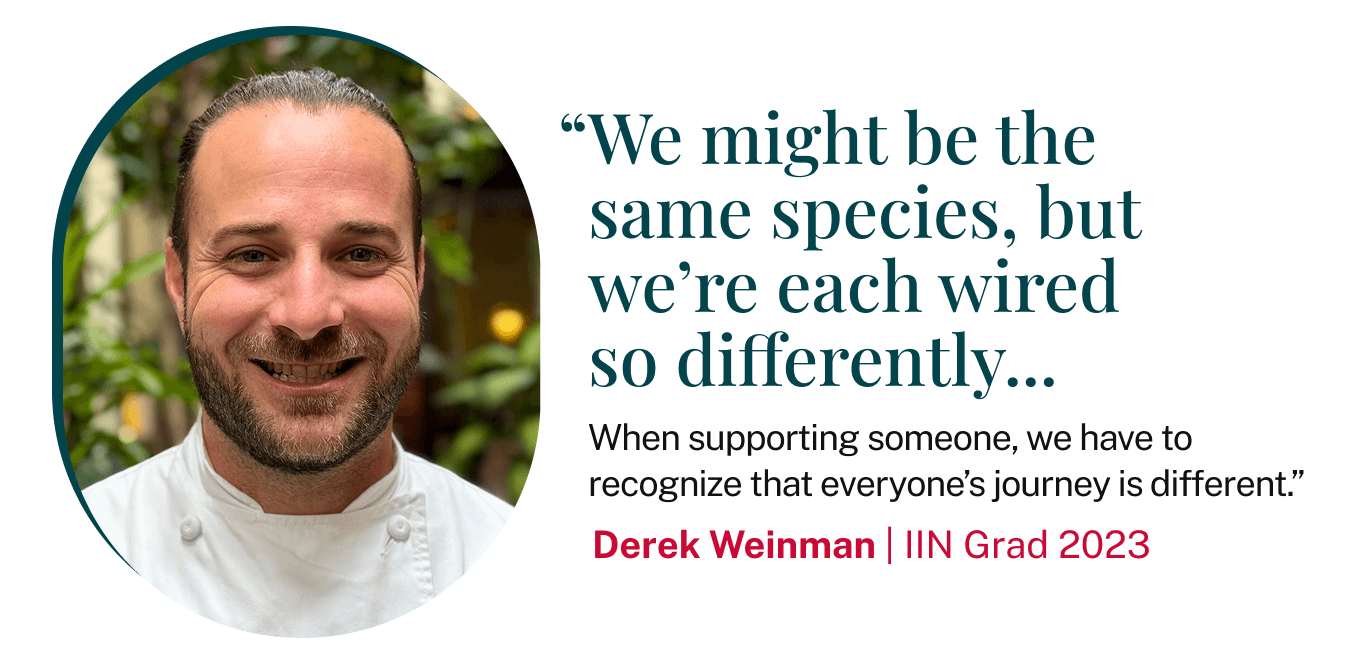
After I got my symptoms into remission, I wanted to help others on their own journeys. The Health Coach Training Program™ showed me that nourishment goes far beyond what’s on the plate. Lessons like Primary Food, Eating the Rainbow, and eating seasonally still shape the way I cook.
Today, at Farming Hope, I mentor apprentices, many of whom haven’t always had people believe in them, and help create meals for families in our community. I bring coaching into the kitchen through curiosity, breathwork, and small steps, because when we slow down, we start to see what’s possible.
Q&A: The Beginning
WHAT FIRST DREW YOU TO COOKING, AND WHEN DID YOU BEGIN TO SEE IT AS MORE THAN JUST A CAREER?
A: What first drew me to cooking was actually a palate cleanser during a meal. I was blown away that one simple ingredient could change your palate for the next thing to enter your mouth. Around eight years old, I remember flipping between Food Network and Discovery Health, watching surgeries, medical diagnoses, and cooking shows. Cooking grabbed my heart. I was constantly watching chefs like Ina Garten, Emeril Lagasse, and Jamie Oliver. I would kick my mom out of the kitchen so I could cook for everyone. As I got older, I took elective cooking and home economics classes. When I went off to college, I was really able to start cooking for myself. I remember my first restaurant job as a busser, watching cooks drop pasta into boiling water. Even those simple things fascinated me, and eventually, I found myself working in the restaurant world.
I began seeing cooking as a career in my early twenties, when a mentor saw something in me and asked me to become his sous chef. I learned more working alongside him than I would have roaming from restaurant to restaurant. I knew being with him could help me leap forward into the next chapter of my career. When I moved to California, though, that’s when I really saw myself take off. I knew I needed to be closer to where so much of our food grows. Being surrounded by fresh ingredients and agriculture was where I wanted to be as a chef.
YOU WERE DIAGNOSED WITH CROHN’S DISEASE AS A TEENAGER. HOW DID THAT EXPERIENCE SHAPE YOUR RELATIONSHIP WITH FOOD AND YOUR INTEREST IN UNDERSTANDING THE CONNECTION BETWEEN NUTRITION AND HEALTH?
A: Growing up with Crohn’s disease after being diagnosed at 14 was very hard. Around 17 or 18, I began noticing that cannabis helped ease some of my stomach symptoms. I remember telling people how much it was helping, but I still didn’t understand the connection between food, lifestyle, and my body. I was making unhealthy choices without realizing how they could affect me. Working in restaurants surrounded me with whole foods and fresh ingredients, but I was also living an unhealthy lifestyle.
A turning point came when I traveled to Europe for three months. I made the personal decision to go without my prescribed medication to better understand how food affected my body. I knew where to seek medical help if needed, and it wasn’t a decision I’d recommend others make on their own. When I moved to California, I began questioning my habits and wanted to better understand everything I was putting into my body. Around 26, the light bulb finally clicked. Nutrition was much more than protein shakes and diets. I slowly began making changes, paying attention to how I felt, and learning what worked for me. I still experience symptoms today, but after decades of living with Crohn’s, I’ve learned to better understand my body and how to respond to it. It’s an ongoing journey of awareness and learning.
HOW DID YOUR EXPERIENCE WITH FOOD AND HEALTH INFLUENCE THE WAY YOU APPROACH COOKING AND THE MEALS YOU CREATE FOR OTHERS TODAY?
A: My experiences with food and health have helped me create meals that are colorful and flavorful, while also leading with what is good for the body. I’ve learned to understand ingredients differently: how they work together through flavor, seasonality, and texture, but also how certain foods can trigger different reactions in our bodies. It’s not always perfect, but I do believe ingredients belong together for a reason. I look at it from both sides: how they complement each other on the plate and how they may affect our digestion and overall well-being. What works for one person might not always work for another. When I create a meal, I also think about who I’m cooking for and what the occasion is. I want my food to be a part of the space, not separate from it all. I want it to connect with the people, the environment, and the experience we’re creating together.
Q&A: Your IIN Journey
WHAT LED YOU TO EXPLORE HEALTH COACHING AND ULTIMATELY CHOOSE IIN?
A: What led me to health coaching was my own journey with Crohn’s disease. I knew how difficult it could be, and after getting my symptoms into remission, I wanted to learn more so I could help others on their own journeys. I chose IIN because of its curriculum and what others shared about their experiences. The approach to teaching and learning felt natural to me, and I connected with the different perspectives and people who taught throughout the program.
WAS THERE A PARTICULAR LESSON, CONCEPT, OR MOMENT DURING YOUR IIN EXPERIENCE THAT HAS STAYED WITH YOU?
A: The lessons that have really stuck with me from IIN are Primary and Secondary Food, Eating the Rainbow, and eating more seasonally. They helped me understand that nourishment goes beyond what we eat and also includes how we choose our ingredients, the variety of foods we eat, and how our lifestyle plays a role in our overall well-being.
HOW DID LEARNING ABOUT IIN’S CONCEPTS OF PRIMARY AND SECONDARY FOOD EXPAND YOUR UNDERSTANDING OF WHAT CONTRIBUTES TO A PERSON’S OVERALL WELL-BEING?
A: Learning about this concept helped me understand that Primary and Secondary Food are something we can always come back to when we need to check in with ourselves and find balance. It made me more aware of how our daily lives and the food we eat work together. Does the food we eat fuel our everyday actions? Are our lifestyle choices supporting our well-being? Understanding that connection also helps us make better decisions for ourselves.
HOW HAS BIO-INDIVIDUALITY INFLUENCED THE WAY YOU THINK ABOUT SUPPORTING PEOPLE WITH DIFFERENT BACKGROUNDS, EXPERIENCES, AND HEALTH NEEDS?
A: The way I think about it now is that we might be the same species, but we’re each wired so differently. One food group might work great for someone but not for another. Unfortunately, we’re not always told exactly what foods work best for our bodies, so we have to discover that on our own, through our experiences and by talking with others to gain knowledge. It’s helped me understand that when supporting someone, we have to recognize that everyone’s journey is different.
Q&A: Beyond the Plate
IN WHAT WAYS HAS YOUR PERSPECTIVE ON NOURISHMENT AND WELLNESS SHIFTED THROUGHOUT YOUR JOURNEY?
A: I have a different outlook on nourishment and wellness now. I question what I’m eating and have become more mindful of when I eat, how much I eat, and how I approach a variety of foods. Of course, I veer off sometimes, but I’ve learned to pay attention to my body and how it feels. It’s about being more aware of myself and finding a balance that works for me.
WHAT DO YOU THINK COOKING AND SHARING A MEAL CAN OFFER PEOPLE BEYOND THE FOOD ITSELF?
A: I think cooking can show the life behind the person who prepared the meal and where they might be in their own journey. Cooking is my way of showing respect, kindness, and love. I believe when you respect and love the ingredients you’re working with, it brings so much more out of the food. It all starts with how the meal is prepared, cooked, and handled. Sharing a meal brings comfort to one another and gives someone the opportunity to express themselves and show they care. To me, sharing a meal goes beyond the food itself. It’s an expression of empathy, love, and a good heart.
HOW DO YOU BRING YOUR TRAINING AS A HEALTH COACH INTO YOUR WORK AS A CHEF AND THE WAY YOU CONNECT WITH OTHERS?
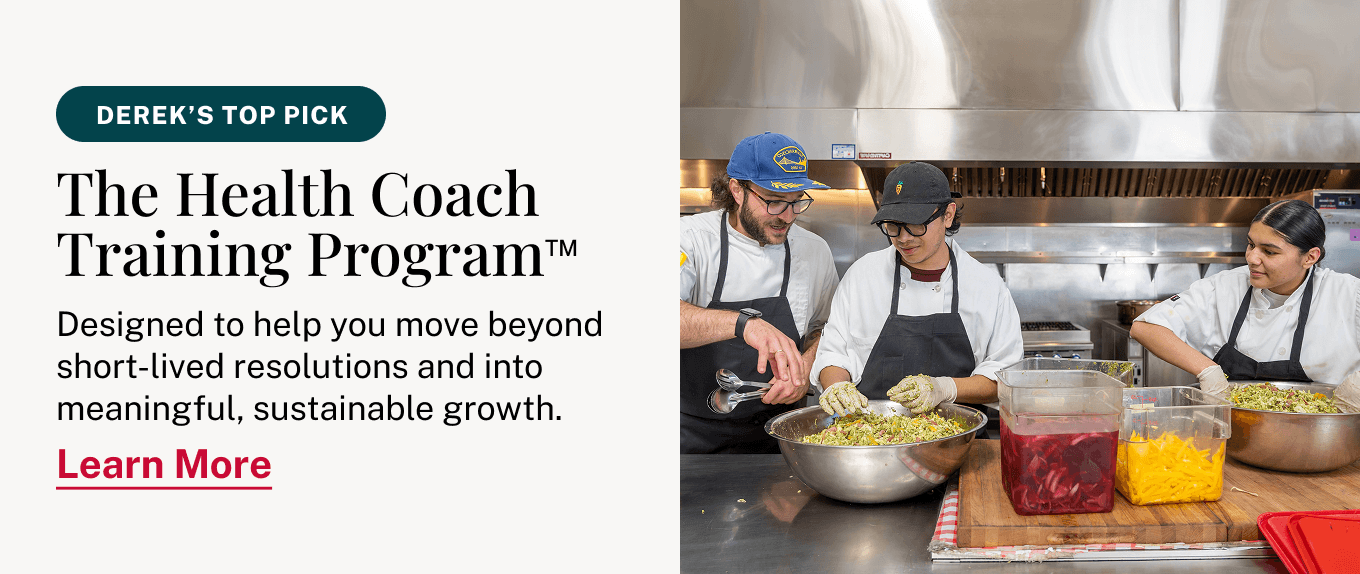
A: I bring my health coaching training into my work as a chef in many ways. I ask questions to get to know people, understand why they’re here, and what they want to take away from cooking. I get curious about each person and observe how they move around the kitchen, finding ways to teach that connect with them individually. I love bringing purpose into the work. I also bring breathwork into the kitchen because I believe how we breathe affects our energy and how we move through a busy day. I try to approach everyone with curiosity and understanding.
Q&A: Food, Community, & Impact
WHAT DREW YOU TO FARMING HOPE, AND WHAT MAKES THE WORK YOU DO THERE MEANINGFUL TO YOU?
A: What drew me to Farming Hope is that it’s a place where people can make a huge change within themselves and bring that change out into the world. The mission behind it is meaningful: bringing the community together and creating three-course meals for families. Seeing kids’ faces light up from the food they get to try is something special. I think the most meaningful part, though, is believing in people who have never done this work before and watching them grow. What I love most is the aftereffect, when they move on to a new job and come back to thank us for helping them evolve into a new version of themselves.
HOW DO YOU USE FOOD, CULINARY EDUCATION, AND MENTORSHIP TO HELP PEOPLE RECOGNIZE THEIR STRENGTHS AND EXPLORE NEW POSSIBILITIES?
A: Wow, that’s a question I never saw coming! I use food, culinary education, and mentorship to help people recognize that it starts with believing in themselves. Sometimes it’s the little things, like learning how to hold a knife properly, that make a big difference in someone’s confidence. It’s not about others telling you how awesome you are or to keep going. It’s about you knowing that you can do the work in front of you. I remind them that if I was able to find my way without going to culinary school, they can find their own path too. Once you conquer something you thought you couldn’t do, you begin to see what else is possible.
CAN YOU SHARE A PARTICULAR MOMENT AT FARMING HOPE WHEN YOU SAW SOMEONE RECOGNIZE A STRENGTH OR POSSIBILITY IN THEMSELVES THAT THEY HADN’T SEEN BEFORE?
A: Everyone has their own moments of growth, but what I love most is when someone begins recognizing a strength within themselves that they hadn’t seen before. A lot of people who come through Farming Hope haven’t always had others believe in them. I remember one apprentice who would often come up to me and say, “This person isn’t doing it like I did,” or “This person is doing something wrong.” One day, I told him, “Worry about yourself and let the managers worry about the others. Focus on where you are. It will help you.” A few months after he graduated, he came back and said, “Derek, I understand now what you meant by worrying about myself and where I am rather than others.” That moment stayed with me because sometimes people don’t realize their own growth until later.
YOU’VE SPOKEN ABOUT THE IMPORTANCE OF PLANTING A SEED OF AWARENESS RATHER THAN EXPECTING CHANGE TO HAPPEN OVERNIGHT. HOW DOES THAT BELIEF SHAPE THE WAY YOU ENCOURAGE AND SUPPORT OTHERS?
A: I believe in planting seeds rather than expecting someone to make a huge change in three months. I find that small steps can eventually lead to big changes. As people learn new techniques, they build awareness and confidence along the way. Kitchens have so much to learn, and it all takes time and practice. I like to tell people to “slow down to speed up.” So many of us try to impress others or prove we can do something before fully understanding what we’re doing. When we slow down, practice, and become more aware of the work in front of us, we begin to understand the purpose behind it. Each small step plants another seed, and over time, those seeds grow into something bigger. That’s how we begin to see a new part of ourselves blossom.
Q&A: Reflecting & Looking Ahead
WHEN YOU LOOK BACK AT THE PERSON YOU WERE BEFORE IIN AND COMPARE THAT WITH WHERE YOU ARE TODAY, WHAT HAS CHANGED MOST?
A: The biggest change I’ve noticed in myself is my awareness of everything around me. I see things differently now, from how a building has life to how every little nook and detail has a purpose and a reason for being there. I’ve become more curious about the world around me and more mindful of things I might have overlooked before. It’s helped me appreciate how everything around us connects in its own way.
WHAT ADVICE WOULD YOU SHARE WITH SOMEONE WHO WANTS TO MAKE A CHANGE IN THEIR LIFE BUT FEELS OVERWHELMED BY WHERE TO BEGIN?
A: I tell people to write down three things they may want to change and start with the one that looks at them first. Take it 1%, not 2%, 3%, or 5%. Start small and allow yourself to feel into what you’re trying to change and understand what’s holding you back. It may not work right away, but you’ve already started the process. And it’s okay if something else gets in the way. You can always come back to it and keep moving forward, one small step at a time.
WHAT ARE YOU MOST EXCITED TO CONTINUE CREATING, LEARNING, OR CONTRIBUTING TO THROUGH YOUR WORK AS A CHEF AND HEALTH COACH?
A: What I’m most excited about right now is creating the next version of who I am as a chef and seeing how Farming Hope has been transforming me into a better version of myself. I’m continuing to learn more about who I am and becoming more open to how others see me. I want to dive deeper into understanding the body and mind and bring more of that into my life as a chef. Food is more than just filling us up; it’s about fueling our bodies to feel good each day. I want to bring more awareness to Primary and Secondary Food so people can understand how both work together. What I’m most excited to contribute is helping people learn to feel and become more aware of how their own bodies talk to them. I believe that when we begin listening to our bodies, we can better understand what we need and how our everyday choices affect us.
Q&A: Fun Favorites
WHAT SONG ALWAYS PUTS YOU IN A GOOD MOOD?
A: “Sabrina” by Fred again.., East Forest, and Anderson .Paak.
IF YOU COULD BE ANY FRUIT OR VEGETABLE, WHICH WOULD YOU BE—AND WHY?
A: As a fruit, I would be a peach: juicy and versatile. As a vegetable, celery root. I love the creaminess.
WHAT’S YOUR IDEAL WAY TO SPEND A COMPLETELY FREE DAY OUTSIDE OF THE KITCHEN
A: Being in nature, lying under trees.
Published: November 18, 2026
Updated: November 18, 2026


