
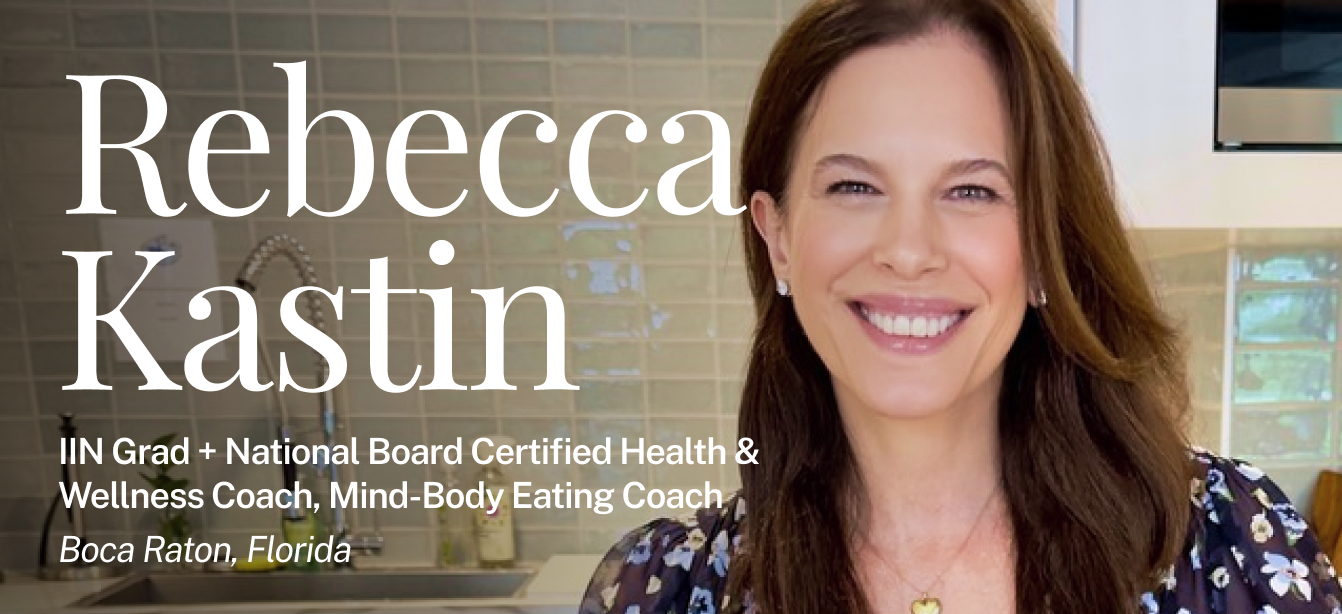
I spent decades trying to perfect my body through food rules and discipline, believing that if I could just get it right, I would finally feel at ease. On the outside, I appeared healthy and high-functioning. On the inside, I was depleted and disconnected. Healing my own relationship with food, stress, and self-worth made me realize I wanted to help women move beyond restriction and toward true nourishment—and that desire led me to IIN.
After completing The Health Coach Training Program™, I didn’t just gain an education—I gained a framework that connected functional nutrition, hormonal health, and nervous system regulation in a way that finally made sense. IIN helped me shift from control to partnership, both in my own life and in my work. Now, I guide women in midlife toward sustainable metabolic health and lasting balance—without guilt, burnout, or rigid rules.
Q&A: The Beginning: What Set You on This Path
WHAT FIRST DREW YOU TO THE WORLD OF HEALTH, WELLNESS, AND FUNCTIONAL NUTRITION?
A: What drew me was the process of healing my own relationship with food, my body, and my health. For decades, I did what so many women are taught to do. I tried to control my body, and in many ways my life, through food rules and discipline in pursuit of perfection and self-worth. On the outside, I looked healthy. On the inside, I was exhausted, depleted, and disconnected. That experience fundamentally changed how I see wellness.
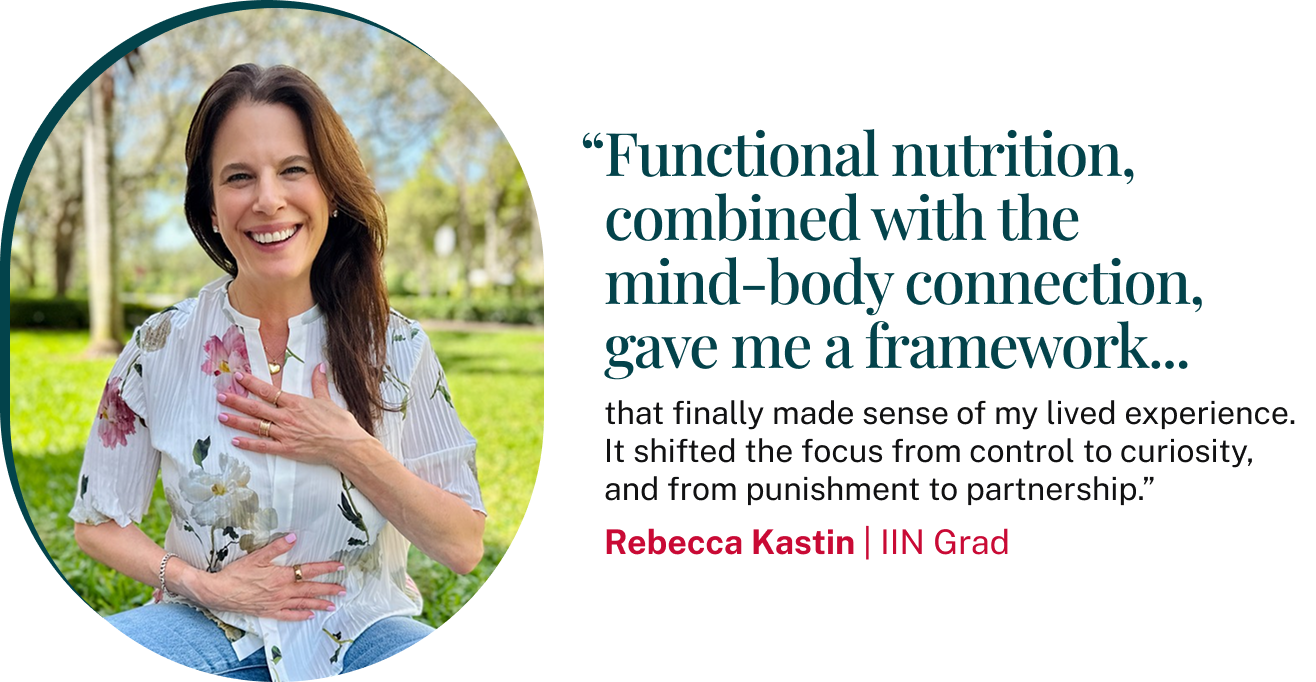
As I began repairing my relationship with food, metabolism, and self-trust, I became deeply curious about joy, embodiment, and why certain approaches worked temporarily yet ultimately failed. Functional nutrition, combined with the mind-body connection, gave me a framework that finally made sense of my lived experience. It shifted the focus from control to curiosity, and from punishment to partnership. My work today is rooted in that understanding. True health is not about fixing a broken body or soul, but about restoring safety, self-love, nourishment, and trust, something I had to learn for myself before I could help others do the same.
WAS THERE A MOMENT WHEN YOU REALIZED YOU WANTED TO SUPPORT WOMEN DIFFERENTLY THAN WHAT YOU WERE SEEING IN MAINSTREAM WELLNESS?
A: I began to see that much of mainstream wellness focused on fixing or tightening discipline, while missing the deeper relationship women had with themselves. Women were not failing. They were responding to stress, hormones, nervous system overload, and the sheer weight of their lives. The real turning point for me was realizing that lasting change did not come from trying harder or controlling food more tightly. It came from letting go and rebuilding trust and compassion with the body. I did not want to teach women how to override their needs. I wanted to help them understand their signals, soften the inner dialogue, and create health from a place of self-respect rather than self-criticism. That shift from control to connection continues to guide my work.
Q&A: From Symptoms to Wholeness
AS YOU BEGAN WORKING WITH WOMEN, WHAT PATTERNS OR FRUSTRATIONS DID YOU NOTICE THAT MADE YOU WANT TO MOVE AWAY FROM DIETING AND QUICK FIXES?
A: I saw the same pattern repeat itself in all the women I worked with: restriction, deprivation, short-term results, and then shame when the approach stopped working. What followed was not just burnout, self-judgment, and self-deprecation. Women assumed they had failed rather than questioning the messaging itself. Dieting was not solving the problem. It was often reinforcing disconnection and criticism toward the body. What women truly needed was not another diet, but nourishment with real whole food, stability, and a sense of safety. When judgment softened and the body felt supported, everything began to shift.
WHEN DID IT CLICK FOR YOU THAT HEALING THE RELATIONSHIP WITH FOOD, STRESS, AND THE NERVOUS SYSTEM WAS JUST AS IMPORTANT AS NUTRITION ITSELF?
A: Early in my training, when I was a new student, Joshua [Rosenthal] was discussing a case study of a beautiful high-achieving woman. On the surface, she appeared happy and successful, but at the end of a long workday she would come home, put on sweatpants, and eat the contents of the refrigerator. Joshua explained that she did not have a broken relationship with food. She had a strained relationship with herself. Food was not the problem. It was filling a space that felt empty, overwhelmed, and unloved. That moment stopped me in my tracks. It was the first time all the pieces came together. I realized that food, or restricting food, could not resolve patterns rooted in stress, trauma, emotional depletion, and nervous system overload. That insight became the catalyst for change in my own life and ultimately shaped how I work with women today. Health, I learned, is not just about what we eat, but how safe, supported, and connected we feel in our bodies and our lives.
Q&A: Education & Integration
WHAT LED YOU TO PURSUE YOUR HEALTH COACHING EDUCATION THROUGH THE INSTITUTE FOR INTEGRATIVE NUTRITION?
A: IIN found me at a time when I knew I needed to make changes in my life and in how I was thinking and caring for myself. I was moving through a difficult season personally and becoming more aware that how I showed up mattered, not only for me, but for my three daughters as well. I did not come to IIN with a clear plan or a specific outcome in mind. I came looking for a deeper understanding of my own wellness.
The program gave me language and perspective that helped me connect the dots between food, stress, and self-love in a way I had not experienced before. What began as education became a foundation for how I live, how I parent, and how I now support other women. IIN helped me learn how to care for myself in a way I could sustain, and that changed everything.
AS AN IIN GRADUATE, HOW DID YOUR TRAINING HELP YOU BRIDGE FUNCTIONAL NUTRITION, BEHAVIOR CHANGE, AND EMOTIONAL WELLNESS?
A: My training helped me see that information alone does not create change. Context does. Functional nutrition explains what the body needs, but behavior change and emotional wellness determine whether those needs can realistically be met. IIN taught me how to look beyond food plans and protocols and understand the human in front of me, including their stress, habits, history, genetics and capacity. It helped me bridge the gap between physiology and real life, so recommendations feel supportive rather than overwhelming. That integration allows my work to be both effective and sustainable. Nutrition becomes a tool for care, not control, and change becomes something women can live with, not just follow for a short period of time.
WAS THERE A SPECIFIC LESSON OR MOMENT AT IIN THAT INFLUENCED HOW YOU WORK WITH CLIENTS TODAY?
A: Yes! The lesson on bio-individuality and meeting people where they are, not where a plan says they should be. That idea fundamentally changed how I thought, and I worked. It helped me understand that there is no single “right” way to eat, heal, or live well, and that lasting change comes from curiosity and flexibility, not rigid rules. That lesson continues to guide how I support clients today: by listening first, honoring their lived experience, and building strategies that fit their real lives. That shift—from prescribing to partnering, still shapes everything I do.
Q&A: Supporting Women in Midlife
TELL US ABOUT THE WOMEN YOU WORK WITH NOW AND WHAT THEY’RE OFTEN EXPERIENCING WHEN THEY FIRST COME TO YOU.
A: The women I work with are often high-functioning and capable, yet quietly frustrated. Many are navigating midlife changes, including shifts in hormones, energy, weight, sleep, brain fog, or mood, and feel confused because what used to work no longer does. When they first come to me, they are usually tired of trying harder. They have followed the advice, done the programs, and blamed themselves when their bodies did not respond the way they expected.
There is often a mix of physical symptoms and emotional exhaustion, along with a desire to feel like themselves again without living in restriction or constant self-criticism. What they are really seeking is clarity, support, and a way forward that feels sustainable, something that honors both their biology and their lives.
HOW DO YOU HELP CLIENTS RESTORE METABOLIC HEALTH AND BALANCE HORMONES WITHOUT RESTRICTION, GUILT, OR BURNOUT?
A: I help clients restore metabolic health and hormonal balance by shifting the focus away from restriction and toward nourishment, regulation, and consistency. Instead of asking women to eat less or push harder, we begin by stabilizing the body through adequate fuel, balanced blood sugar, and supportive daily rhythms. I look at the whole picture. That includes how a woman is eating, sleeping, moving, managing stress, and speaking to herself. We build structure without rigidity and accountability without shame.
When the nervous system feels supported, the body is far more responsive to change. By addressing physiology alongside behavior and emotional wellbeing, clients can rebuild trust with their bodies. The result is improved energy, steadier metabolism, and hormonal balance that feels sustainable, not depleting.
WHEN A CLIENT STARTS FEELING MORE LIKE HERSELF AGAIN, WHAT CHANGES TEND TO SHOW UP FIRST?
A: When a client starts feeling more like herself again, the first changes are often subtle but meaningful. Energy becomes more stable throughout the day; digestion improves and bloating or discomfort begins to ease. Sleep often becomes more restorative, and cravings quiet, making food feel less charged. Many women also notice shifts in mood and mental clarity. There is less reactivity, less self-criticism, and more confidence in their choices. They feel calmer in their bodies and more resilient in the face of stress. These early signals tell us that the body feels safer and more supported. From there, deeper metabolic and hormonal improvements can unfold naturally, without force or burnout.
Q&A: Philosophy & Perspective
YOU INTEGRATE NERVOUS SYSTEM REGULATION INTO YOUR WORK. WHY IS THIS SUCH A CRITICAL PIECE OF SUSTAINABLE HEALTH?
A: Nervous system regulation is critical because a dysregulated body is always prioritizing survival over repair. When the nervous system is under constant stress, processes like digestion, hormone balance, metabolism, and sleep are compromised, no matter how “healthy” someone’s habits appear on paper. By supporting regulation first, the body can shift out of fight-or-flight and into a state where healing and adaptation are possible. This allows nutrition, movement, and lifestyle changes to take hold instead of feeling like another thing to manage or force. Sustainable health is not built through willpower. It is built when the body feels safe enough to respond.
WHAT’S ONE COMMON MYTH ABOUT MIDLIFE HEALTH OR METABOLISM YOU’RE PASSIONATE ABOUT REFRAMING?
A: One of the most damaging myths is that metabolic decline in midlife is inevitable, and that weight gain or loss of vitality is simply the price of aging. Midlife is a period of transition, not failure. During perimenopause and menopause, the body is responding to hormonal changes, shifts in estrogen and progesterone, cumulative stress, and years of undernourishment or overexertion, not suddenly “breaking.” When we stop fighting these changes and start supporting the body with adequate fuel, strength training, rest, and nervous system regulation, the body lives in harmony.
WHAT DO YOU WISH MORE WOMEN UNDERSTOOD ABOUT CARING FOR THEIR BODIES DURING THIS PHASE OF LIFE?
A: I wish more women understood that their bodies need more support, not more discipline. This phase of life calls for listening more closely, slowing down where needed, and building consistency rather than chasing extremes. Caring for the body in midlife is not about reclaiming the past. It is about creating stability, strength, and trust for the years ahead.
Q&A: Living the Work
HOW DO YOU PERSONALLY SUPPORT YOUR OWN ENERGY, METABOLISM, AND WELLBEING?
A: I keep things simple and consistent. I focus on eating enough, prioritizing protein, and maintaining steady daily rhythms around meals, movement, and sleep. I strength train, walk regularly, and pay close attention to how stress shows up in my body. Nervous system support, time outdoors, and clear boundaries around rest are just as important to me as nutrition. I no longer chase perfection. I focus on what is sustainable, because consistency is what allows my body to feel supported.
WHAT’S ONE SIMPLE HABIT THAT CONSISTENTLY MAKES THE BIGGEST DIFFERENCE IN YOUR DAY?
A: Sleep and maintain a regular bedtime. Protecting my sleep supports everything else I do, from energy and metabolism to mood and focus. When my sleep is consistent, my days feel steadier and my body responds better across the board.
WHEN LIFE FEELS FULL, WHAT HELPS YOU COME BACK TO BALANCE?
A: Yoga has always been my anchor. It’s the one place where I can turn my brain off, focus on my breath, and fully come back into my body. I also play crystal sound bowls, and the vibration brings a deep sense of calm and grounding. Together, they help me settle, reset, and feel more balanced again.
Q&A: Reflection & Wisdom
WHAT HAS BEEN THE MOST MEANINGFUL PART OF YOUR WORK SO FAR?
A: The most meaningful part of my work has been witnessing women reconnect with themselves. As self-criticism softens and trust returns, their bodies begin to respond with ease instead of resistance. Struggles with weight often resolve naturally, and weight release happens without force. Even more powerful is watching women learn how to enjoy food again without fear or guilt. Seeing them feel nourished, confident, and at peace with their bodies is what makes this work so deeply meaningful to me.
WHAT ADVICE WOULD YOU GIVE TO A WOMAN WHO FEELS DISCONNECTED FROM HER BODY OR DISCOURAGED BY PAST ATTEMPTS AT “DOING EVERYTHING RIGHT”?
A: Nothing is wrong with her. Feeling discouraged doesn’t mean she failed; it means the approach didn’t honor her body or her life. Healing begins when we stop trying to fix ourselves and start listening. With patience and consistent care, the body responds.
IF YOU COULD GO BACK AND SPEAK TO YOUR YOUNGER SELF AT THE START OF THIS JOURNEY, WHAT WOULD YOU SAY?
A: I would tell her that her worth was never meant to be measured by a number on the scale. The struggle wasn’t her body; it was the belief that her value depended on controlling it. Letting go of that belief is where healing truly begins.
Q&A: Fun & Light Favorites
BEST DECISION YOU’VE EVER MADE FOR YOUR HEALTH OR WELLBEING?
A: The best decision I ever made for my health and wellbeing was investing in myself by going back to school at 52. I put everything I had into my education at IIN, and it changed the trajectory of my life. It was a leap of faith, and it continues to shape how I live today.
A BOOK OR PODCAST YOU’D RECOMMEND TO THE IIN COMMUNITY RIGHT NOW?
A: I’d recommend Good Energy by Casey Means. It does a beautiful job of reframing health around metabolic resilience, energy, and cellular function in a way that feels empowering rather than restrictive. It connects the dots between the food we eat, blood sugar, hormones, lifestyle, and long-term vitality, and reminds us that feeling good is not a luxury; it’s foundational.
IF YOU COULD BE ANY FRUIT OR VEGETABLE, WHICH WOULD YOU BE — AND WHY?
A: An avocado. Nourishing, grounding, and deeply supportive. It brings richness and balance, helps stabilize energy, and makes everything it’s paired with feel more satisfying. It’s not flashy, but it’s essential.
WHAT ARTIST OR SONG DO YOU TURN TO WHEN YOU NEED A MOTIVATION BOOST?
A: Anything Stevie Nicks. Her music is grounding, powerful, and unapologetic. It reminds me to trust my intuition, stay rooted, and keep moving forward.

Published: February 20, 2026
Updated: February 20, 2026